
SDC’s institutional orientation on C/D/E
Based on multiple international frameworks and enrooted in the Swiss national legislation, C/D/E themes are strongly reflected in Switzerland’s Foreign Policy, and thus also in SDC’s institutional orientation.
Article 2 of the Federal Constitution confirms the importance of sustainable development and the long-term preservation of natural resources. This importance is reflected in the Federal Act on International Development Cooperation and Humanitarian Aid (e.g. art. 5 and 7) and, together with the FDFA's current strategic guidance documents, forms the institutional orientation for the SDC in the area of C/D/E: The Swiss Foreign Policy Strategy 2024-2027 includes the ecological dimension of sustainability as a new priority of Switzerland’s foreign policy, with an explicit focus on climate, biodiversity and pollution as well as energy (goals 21-23). This priority is reflected in the Swiss International Cooperation Strategy 2025-2028 through its objective 3 on climate and environment, which strives for environmentally-friendly development, resilient to climate change and natural disasters for the benefit of the most disadvantaged. The Swiss IC strategy 2025-2028 also defines the earmarked financial contribution to Switzerland’s international public climate financing for the referred period of 1.6 billion CHF. This goal will be achieved through the concerted efforts of all Swiss actors involved in the implementation of the Swiss IC strategy and is closely monitored and reported.
The Swiss Agency for Development and Cooperation operationalizes the overarching strategic cascade through concrete cooperation programmes for geographic and thematic units. Within this setup, the SDC’s thematic section Climate, DRR and Environment serves on the one hand as thematic pacemaker and supports the necessary thematic quality assurance of SDC activities focusing on C/D/E. On the other hand, the CDE section strongly contributes to achieving the objective on climate and environment and the respective financial goal through its own programmatic framework.
The programmatic framework of CDE Section's 2025-2028 outlines three strategic outcomes, all contributing to the overarching goal of advancing inclusive, peaceful, and green development for people and the planet.
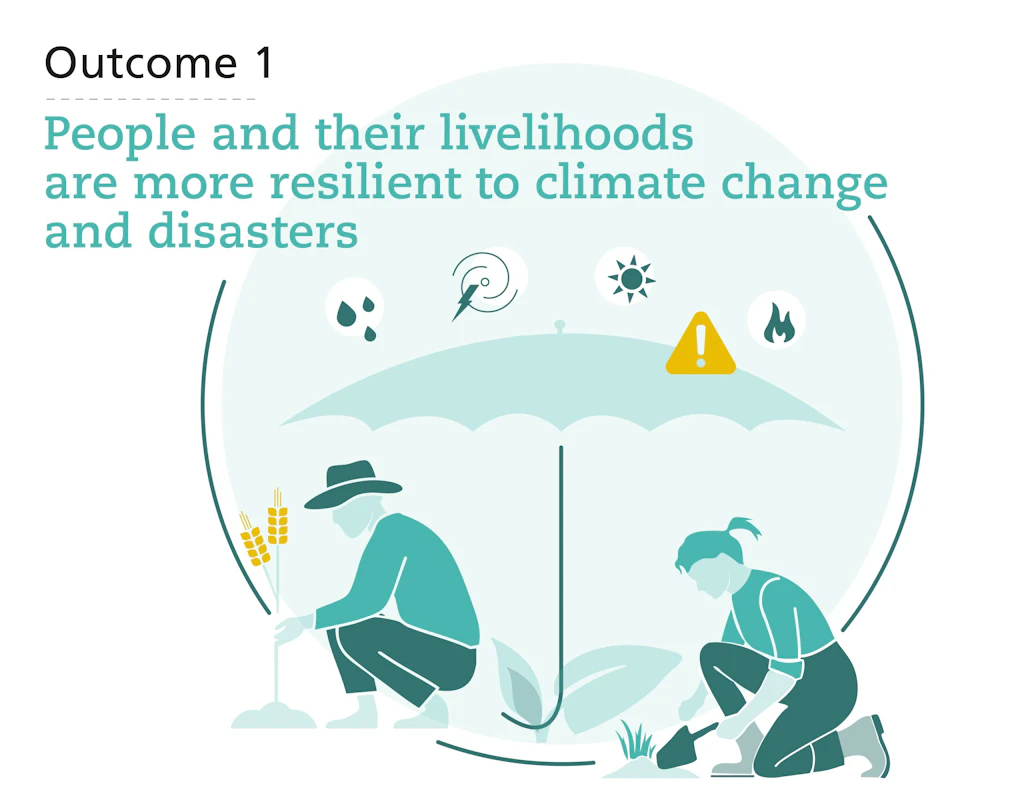
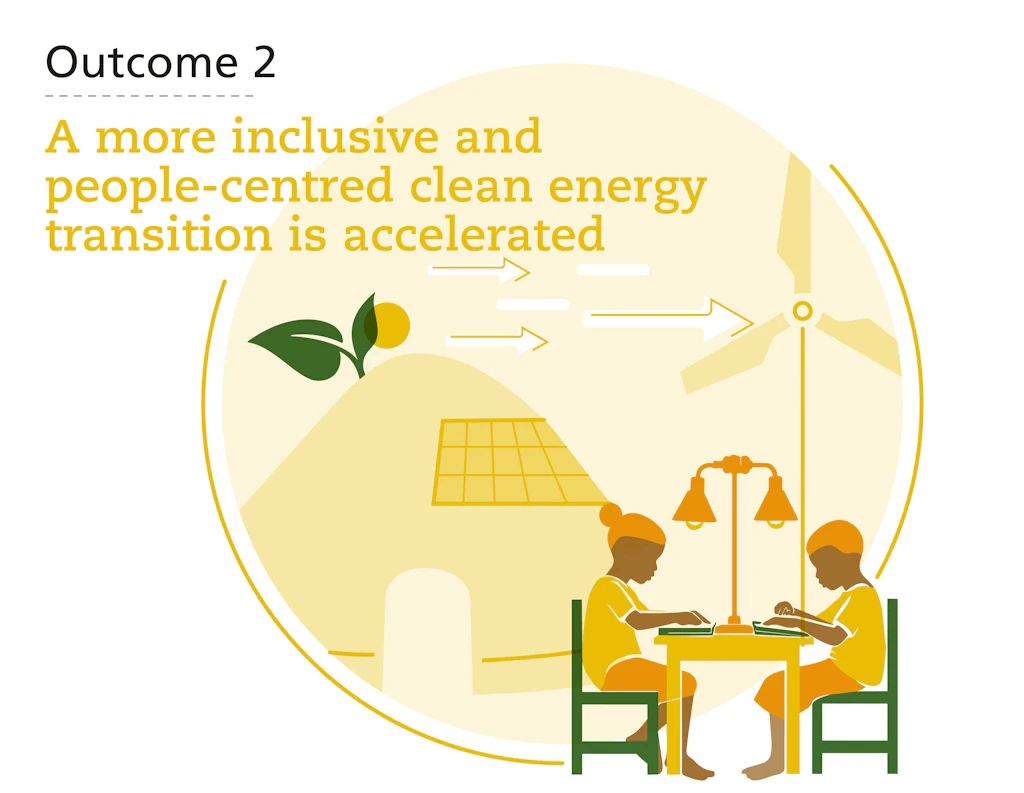
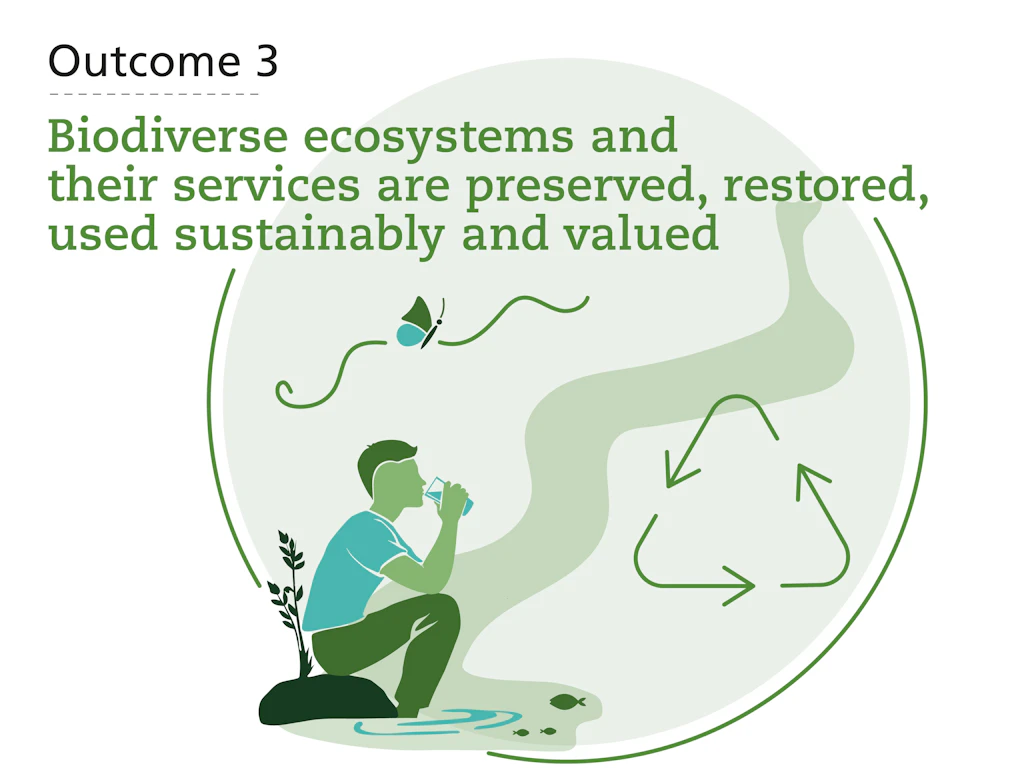
International frameworks and Swiss positioning
Switzerland’s work on climate, DRR and the environment is closely aligned with and in support of the most relevant global policy frameworks, which in turn are supported by many relevant global funds and financial mechanisms. In the following, the key frameworks and financial institutions are described.
Work on C/D/E forms an important foundation for achieving the Sustainable Development Goals SDGs (see figure below and references to the SDGs in figure above).
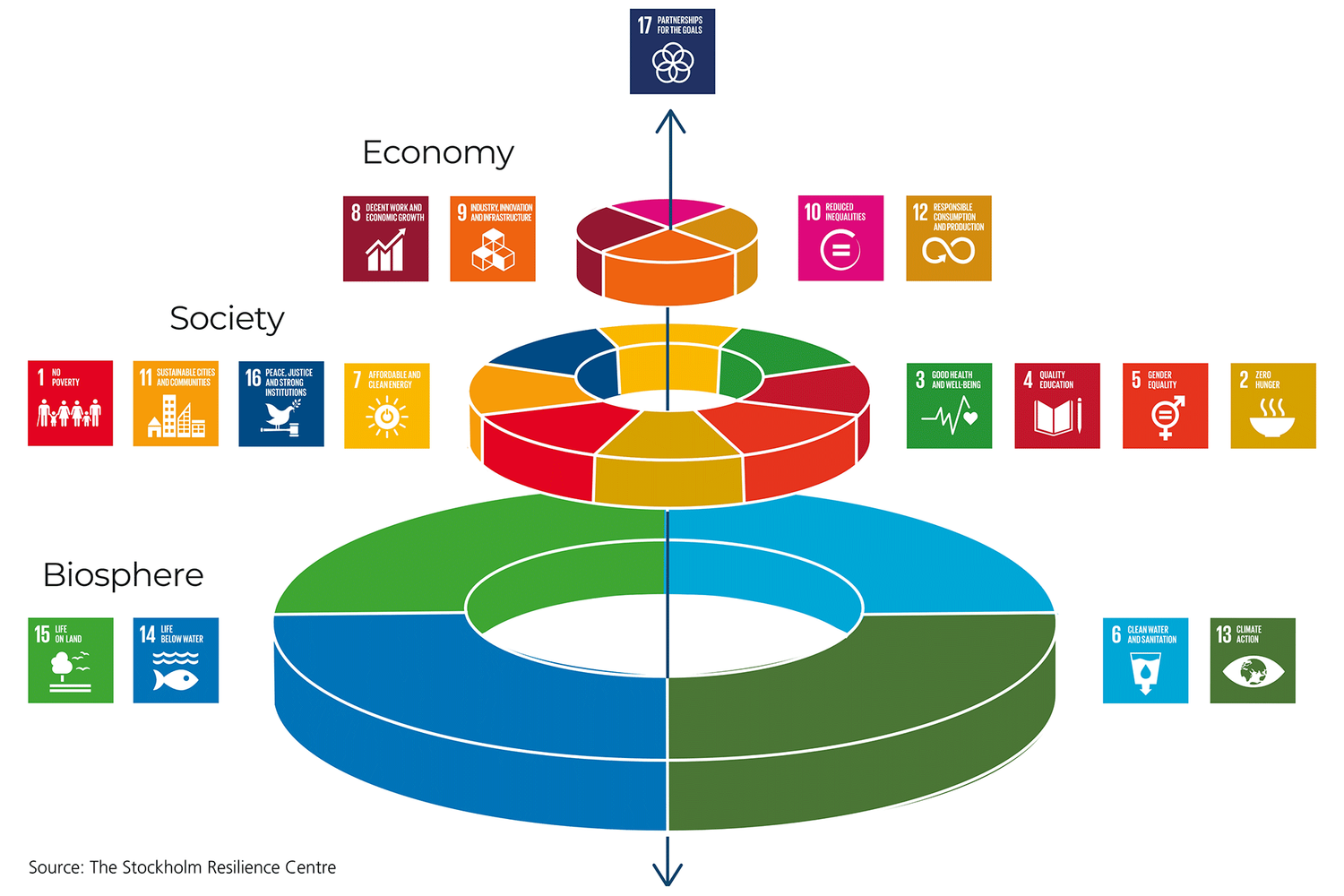
The three Rio Conventions on Biodiversity, Climate Change and Desertification derived from the 1992 Earth Summit in Rio de Janeiro, provide global policy norms and guidance for their respective themes.
The Convention on Biological Diversity CBD and its Kunming-Montreal Global Biodiversity Framework adopted in 2022 are the first global agreements on the conservation and sustainable use of biological diversity.
The Paris Climate Agreement PA, adopted in 2015 under the UN Framework Convention on Climate Change UNFCCC strives to tackle climate change through reduction of greenhouse gas emissions, through action to adapt to the impacts of climate change (including losses and damages) and through redirecting financial flows towards log greenhouse gas and climate-resilient development.
The United Nations Convention to Combat Desertification UNCCD entered into force on 26 December 1996, and is the only legally binding framework set up to address desertification and the effects of drought.
The Sendai Framework for Disaster Risk Reduction adopted in March 2015 as the first major agreement of the post-2015 development agenda provides Member States with concrete actions to protect development gains from the risk of disasters caused by natural or man-made hazards.
Paris Alignment of SDC’s work
Paris alignment refers to alignment with the UNFCCC Paris Climate Agreement and means that climate change needs to be taken into account when investing money, reducing greenhouse gas emissions to a minimum, helping to avoid carbon lock-in and ensuring that the investments are resilient to the adverse effects of climate change.
For the SDC, Paris alignment translates into aligning all its bilateral projects, contributions to multilateral organisations and operations (buildings, travel) with the Paris Agreement. More concretely, it means, that
- For mitigation: All SDC activities must be carried out in such a way that their greenhouse gas emissions are reduced as much as possible, with the aim of achieving net zero emissions by 2050.
- For adaptation and climate resilience: All relevant activities, from the choice of agricultural crops to the location and design of school buildings, must take into account such effects of climate change as rising temperatures, more frequent and intense droughts or floods.
To achieve institution-wide Paris alignment, the SDC explores possibilities to measure Paris alignment, based on best practices such as those of the OECD or OECD member countries. The methodology will be aligned with the updated Swiss Position on Fossil Fuel Investments in MDBs and CEDRIG.
Relevant global funds and financing mechanisms
The Green Climate Fund GCF is the world largest climate fund and aims at accelerating transformative climate action in developing countries. Established in 2010, the GCF is the main channel of climate finance for developing countries and is mandated to invest 50% of its resources to mitigation and adaptation, respectively. In rotation with other countries, Switzerland holds a board seat in the GCF.
The Global Environment Facility GEF covers a multilateral family of funds for the environment. Established in 1991 shortly before the Rio Earth Summit, its core mission is to support developing countries address the root causes of environmental degradation and meet their commitments to environmental conventions and agreements by producing (global) environmental benefits as well as economic and social well-being (i.e., co-benefits). The GEF’s mandate currently covers biodiversity, chemicals and waste, climate change adaptation, climate change mitigation, forests, freshwater, land degradation, and ocean health. As part of a mixed donor-recipient country constituency including six countries, Switzerland holds a seat in the GEF council.
The Adaptation Fund AF was created in 2010 to help vulnerable communities in developing countries adapt to climate change. The AF has pioneered Direct Access by empowering countries to access funding and develop local projects directly through accredited national implementing entities. It is financed from a two percent share of proceeds of Certified Emission Reductions issued under the UNFCCC’s Clean Development Mechanism as well as through governments and private donors.
The GCF, GEF and AF are part of the UNFCCC Financial Mechanism.
Further information on how Switzerland can support partner countries to access these funds can be found here. 🔗
The Global Facility for Disaster Reduction and Recovery GFDRR is a multi-donor partnership programme established in 2006. GFDRR supports low and middle-income countries to understand, manage, and reduce their risks from natural hazards and climate change.
Contact for SDC for all these funds: deza.cde@eda.admin.ch
In addition to the funds mentioned here, the Multilateral Development Banks MDBs play an important role for implementing the different global C/D/E frameworks.